Look, nobody wants their security cameras screaming “Hey, we’ve got cameras here!” to every person walking by. Smart camera placement means getting solid coverage without making it obvious where you’re watching from. If you’re teaming up with experienced private security or doing it solo, hiding your cameras right is half the battle. We’re talking tucking them behind plants, painting them to match your house, stashing them in fake rocks, basically anything that keeps the element of surprise on your side. The whole point is catching what you need on camera without tipping off anyone that they’re being recorded.
Strategic Placement Behind Foliage
Hiding cameras in bushes and trees works great, but you can’t just shove them in there and call it done. You need the leaves to hide the camera without blocking what it’s actually trying to see. Mount it high enough that the branches give you cover, but low enough that you’re not just filming tree bark. Here’s the thing, though, plants grow. That perfect hiding spot in April might be completely overgrown by July, so you’ll need to trim things back now and then. It’s about finding that balance where the camera’s tucked away but still has a clear shot of your driveway, porch, or wherever you’re monitoring.
Camouflage With Surrounding Environment
Your camera should disappear into whatever’s already there. Got brown siding? Paint the camera housing brown. Lots of greenery? Position it near bushes where it blends right in. You can angle cameras to follow the same lines as your gutters or fence posts, so they just look like part of the structure. A white camera on a brick wall stands out like crazy, but match that brick color and suddenly nobody notices it. The idea is to make your security setup invisible to anyone who’s not specifically looking for it.
Disguise as Everyday Objects
This is where you can get creative. Birdhouses aren’t just for birds anymore, they’re perfect camera hideouts. The same applies to mailboxes, especially those near your front door, where you want to keep an eye on who’s coming and going. You can purchase fake rocks and garden gnomes that have built-in camera compartments, or create your own DIY setup with weatherproof housings. Just make sure whatever you pick can actually survive outside. Rain, snow, summer heat, your disguise needs to withstand the elements while keeping the camera protected. Place these near entry points and walkways, where they blend in naturally but catch all the action.
Conceal Within Outdoor Fixtures
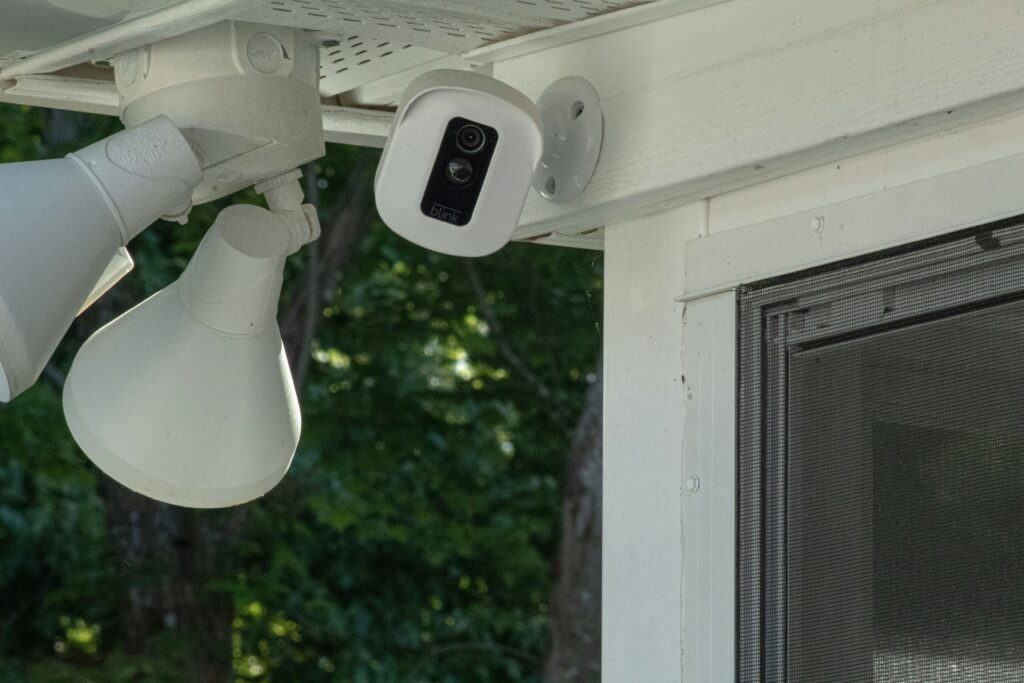
If it’s already in your house, you can likely conceal a camera within it. Porch lights are perfect because they’re up high with a good view, and nobody thinks twice about them. Tuck a camera inside or right next to the fixture, and you’re set. Decorative birdhouses on your porch railing? Camera spot. Planter boxes by your door? Another camera spot. Even your mailbox works if you want to see who’s checking your mail. The beauty here is that you’re not adding anything new or suspicious, you’re just using what’s already part of your outdoor setup.
Install in Hard-to-Reach Areas
Mounting cameras high up where people can’t easily tamper with them is smart on two levels. First, you get a better view of everything below. Second, some punk can’t just walk up and spray paint your lens or yank the whole thing down. Roof eaves, second-story corners, high up in trees, these spots work because they’re tough to access without a ladder. You’ll need the right mounting gear to install them safely, but once they’re up there, they’re staying put. Just double-check that you’re not creating blind spots by mounting too high or at an unusual angle.
Use Wireless and Compact Designs
Wireless cameras changed the game because you’re not required to run cables everywhere. No wires means you can hide cameras in places that would’ve been impossible before. Smaller cameras are easier to conceal, too, they don’t stick out like the old bulky security cameras from the ’90s. Most wireless models these days come with motion detection and night vision built in, so you’re not sacrificing features for size. Additionally, if you need to move a camera or adjust the angle, you won’t have to deal with rewiring anything. Simply unmount it, relocate it to a different location, and you’re done.
Related Topics: