Security guards are around us every day, but most people do not really know what they carry or why. Some assume every guard is armed, while others think it is just a uniform and a radio. The truth sits somewhere in between. This article explains what security guards may carry on duty and how those choices are made. If you are researching trusted unarmed security services in San Jose or simply trying to understand how private security operates, this should give you a clearer picture without the guesswork.
Why Some Security Guards Carry Weapons
Security work is not one-size-fits-all. A guard watching a quiet office building during business hours faces very different situations than someone protecting property overnight. That difference plays a large role in whether a weapon is involved. Locations with higher risk, such as sites handling valuables or sensitive materials, often require armed guards. Other environments focus more on visibility, awareness, and calm response rather than force.
California has strict rules around armed security. Guards who carry firearms must be licensed and trained through the state. Background checks and range qualification are part of the process. These steps exist for a reason, since carrying a weapon on duty carries real responsibility.
Firearms Used by Armed Security Guards
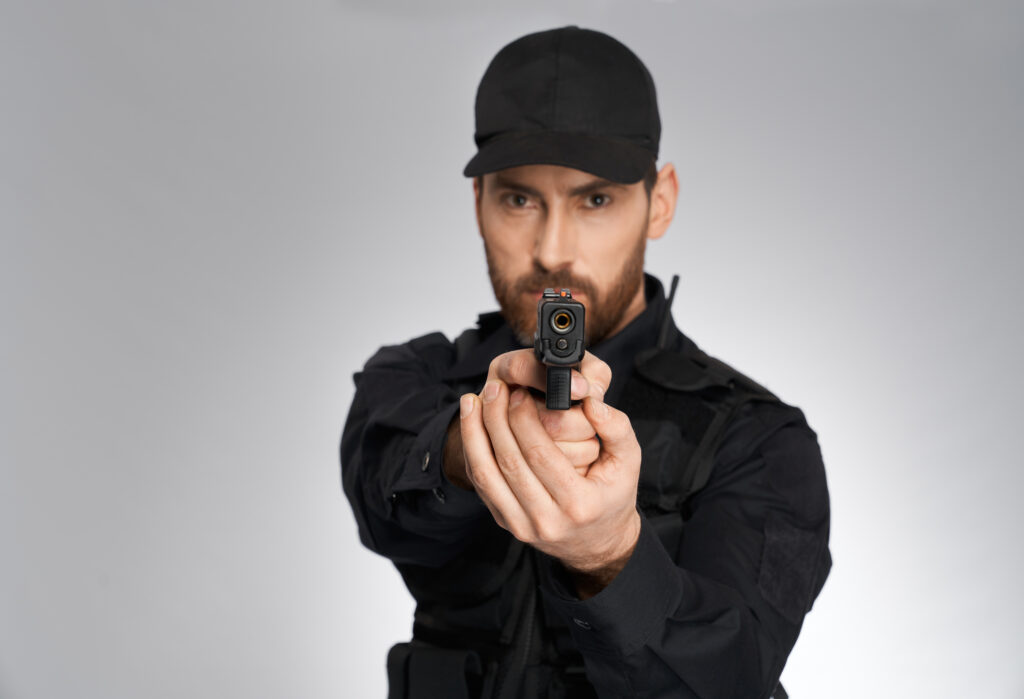
Handguns are the most common firearms used in private security. They are practical, reliable, and suited for close-range defense. Many guards carry well-known models that are easy to maintain and comfortable during long shifts. Comfort matters more than people realize when someone is wearing the same equipment for hours at a time.
Some posts require stronger deterrence. Shotguns may be used at fixed locations where visibility alone helps discourage trouble. Rifles are rare in private security and usually limited to specialized assignments. In each case, the firearm matches the risk level of the job, not personal preference.
Batons and Impact Weapons
There are many situations where a firearm would not make sense. Batons fill that gap. Expandable batons are common because they stay out of the way until needed. They allow guards to create distance or protect themselves during physical confrontations without escalating to lethal force.
Using a baton without training can cause serious problems. Poor technique increases the risk of injury or losing control of the situation. Security companies that take training seriously reduce those risks for everyone involved.
Pepper Spray and Chemical Agents
Pepper spray is widely used in private security because it provides a temporary solution to aggressive behavior. It causes intense discomfort but does not cause lasting harm. Guards use it to stop a situation long enough to regain control or wait for help.
In California, pepper spray is allowed within size limits. Most guards carry small canisters for quick access. Training still matters, since misuse can affect the guard or bystanders, especially indoors or in windy conditions.
Tasers and Stun Devices
Electrical control devices are used in some assignments, though not everywhere. Tasers allow distance, which can reduce injury risk. Stun guns require close contact and are used less often. Both disrupt muscle control for a short time.
These devices require permits and training in California. Guards who carry them are usually assigned to higher-risk posts where added control options make sense.
Handcuffs and Restraint Tools
Handcuffs are common equipment, even for unarmed guards. Once a situation is under control, restraints allow a guard to hold someone safely until police arrive. Metal cuffs are standard, with disposable restraints sometimes carried as backups.
Using restraints incorrectly can lead to injury or legal trouble. Guards must understand when they are allowed to detain someone and when they are not. That knowledge protects everyone involved.
Standard Equipment Beyond Weapons
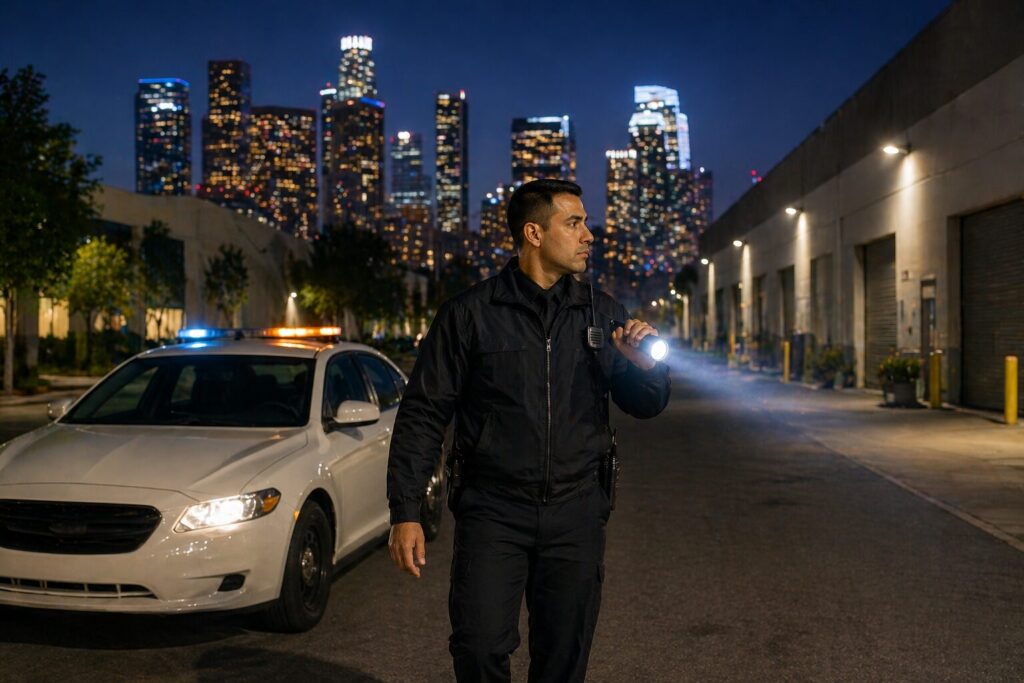
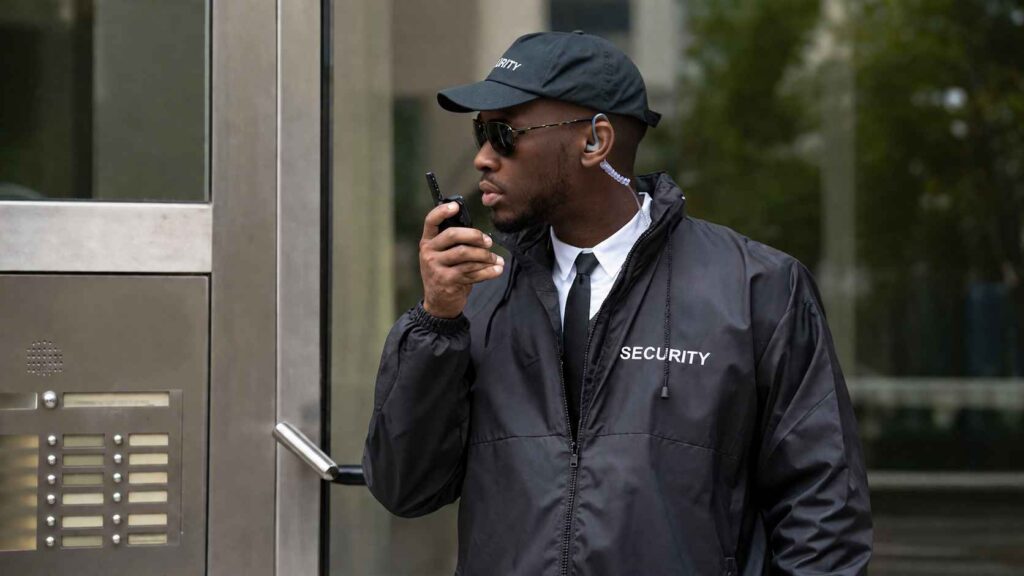
Most of a guard’s job has nothing to do with force. Flashlights help during night patrols. Radios keep guards connected. Body cameras document incidents. Basic medical supplies help during minor emergencies. These tools often prevent problems before they grow into something larger.
Choosing the Right Security Provider
Equipment alone does not make a good security team. Training, judgment, and consistency matter far more. A well-trained unarmed guard can often handle situations better than someone relying on equipment alone. When choosing a security provider, experience and preparation should carry more weight than what is on a duty belt.
Related Topics: